Can i get some pics showing exactly where the vacuum lines should be ran on an LSJ from somebody? I'm having low boost issues and i think i have some of them ran wrong. Thanks!
Yes, I have the same question. Where do all those vacuum lines go...
Lets start with the MAP sensor - do I have it pointed the right way? (with the brass fitting on the right side)
And that brass elbow vacuum line on the side - where does it go?
Thanks Parson. I found the arrow on the MAF - inside the red circle.
The red rectangle is where I put some aluminum duct tape over the hole, as I have a small red air breather for the valve cover.
Thanks Parson. I found the arrow on the MAF - inside the red circle.
The red rectangle is where I put some aluminum duct tape over the hole, as I have a small red air breather for the valve cover. View attachment 9116
The arrow should point towards the engine...so you have the MAF correct. The hole on the MAF housing is for a small brass nipple to mount. That will be for the vacuum hose that goes to the valve cover. I capped mine off, and put an breather filter on the valve cover.
Yeah, the HVAC tape is probably fine at the start of the intake, but I also used it on the wheel bearing caps, where it may get warmer. We will see!
I did put 3 layers of tape on the wheel hubs. Good idea to keep the vacuum lines.
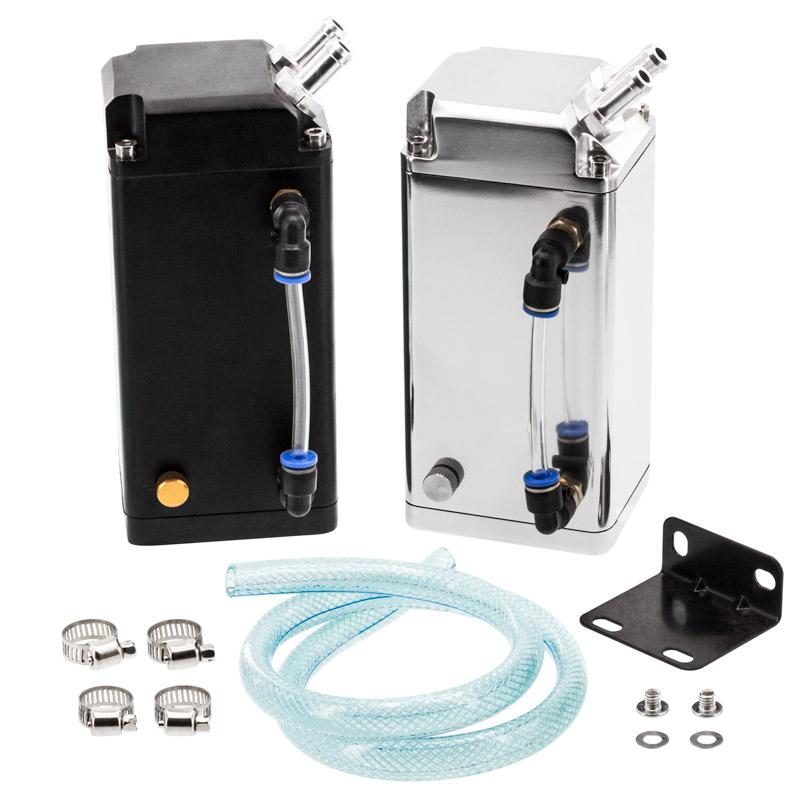
ZZP Universal oil catch can kit. Includes:Can w/ fittings,Can bracket,3/8" hose,Hose clamps,16mm x 1.5mm thread for the top two in/out holes, 10mm x 1.0mm for the drain.2 mounting holes on the back 6mm x 1mm.
zzperformance.com
"This is a universal oil catch can kit. It is intended for high boost applications where the factory PCV cannot flow enough to maintain proper crankcase pressure. It connects your crankcase vent tube to your intake tube. As the intake tube draws a vacuum it will pull the gases from crankcase, and if pressure builds in the crank case it will vent into the intake instead of to atmosphere. The catch can holds the oil as it accumulates in the can. It will need to be drained, how often?, that depends on how much blowby your engine has."
This site uses cookies to help personalise content, tailor your experience and to keep you logged in if you register.
By continuing to use this site, you are consenting to our use of cookies.