
-
We've upgraded and reskinned the forum. Notice something off? Email us at [email protected] and we'll fix it.
You are using an out of date browser. It may not display this or other websites correctly.
You should upgrade or use an alternative browser.
You should upgrade or use an alternative browser.
V1 Disabling Check Engine Light (CEL) and Others


DCMoney
Goblin Guru

- DCMoney Goblin Guru
One of these days I will open up my panel, and cut the traces Chad mentioned.
I will trace & document the ABS light trace then... but here is some notes to help me:
View attachment 10292
Takes all of 4 seconds to pull the cover off the cluster. Electrical tape over the LEDs of the warning lights you don't want to see, non destructive and easy.

Briann1177
Goblin Guru
- Briann1177 Goblin Guru
I second the electrical tape idea especially if you have to label your brake and ABS lights. 

Ross
Goblin Professor

- Ross Goblin Professor
These are the lights left on when my engine is running. Didn't take long to disassemble the dash, and fix these lights.
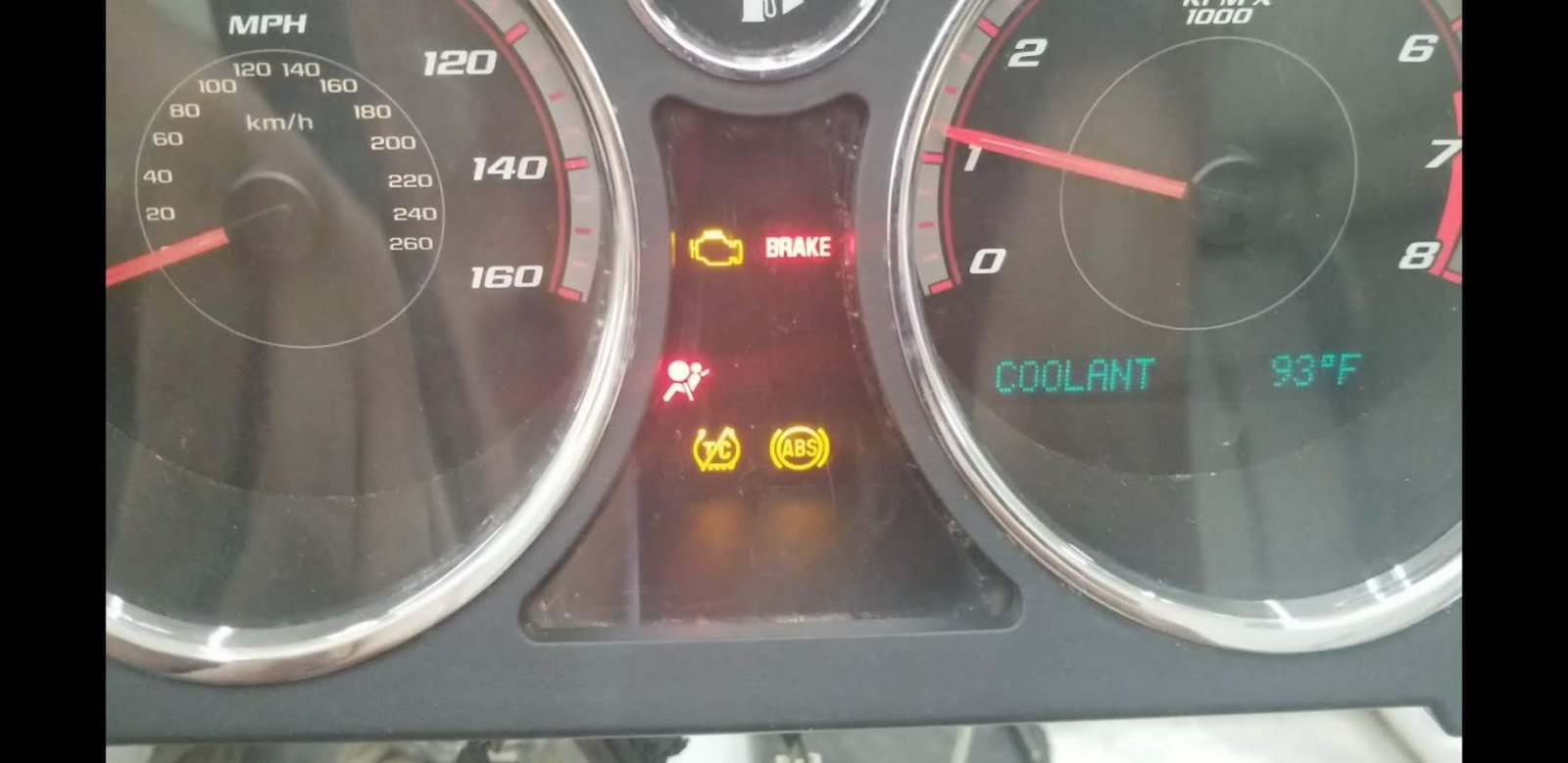
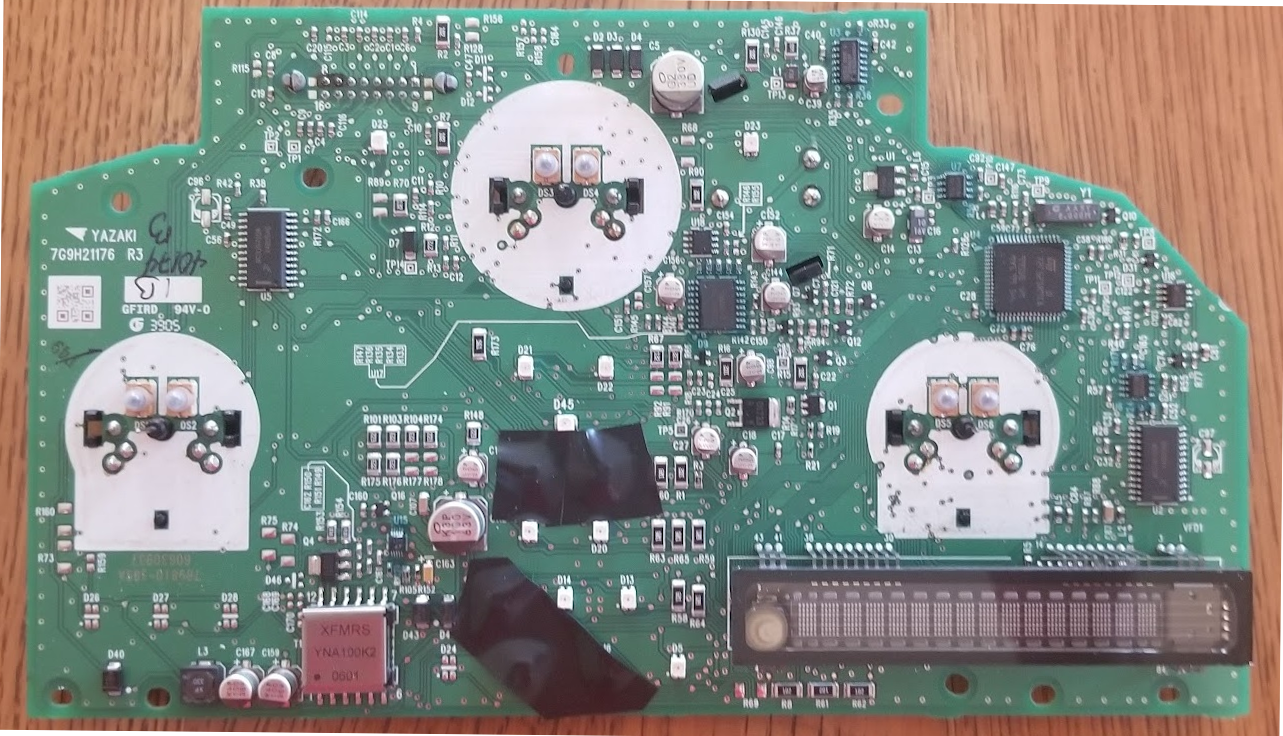
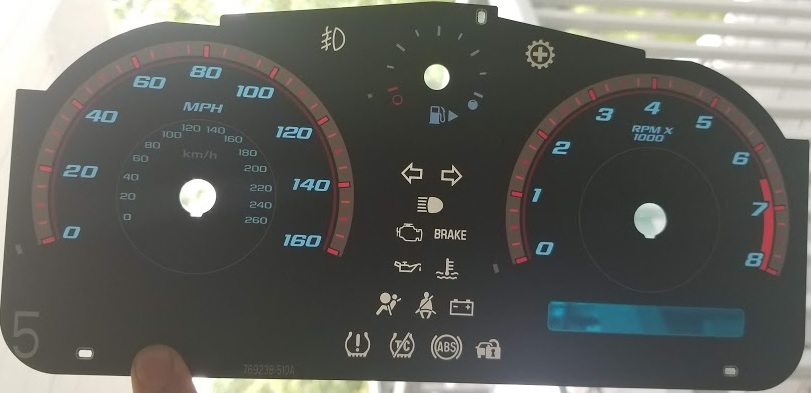
The black tape covers those 5 LEDs, and the next picture is the dash film when placed on a window to show all the translucent areas.
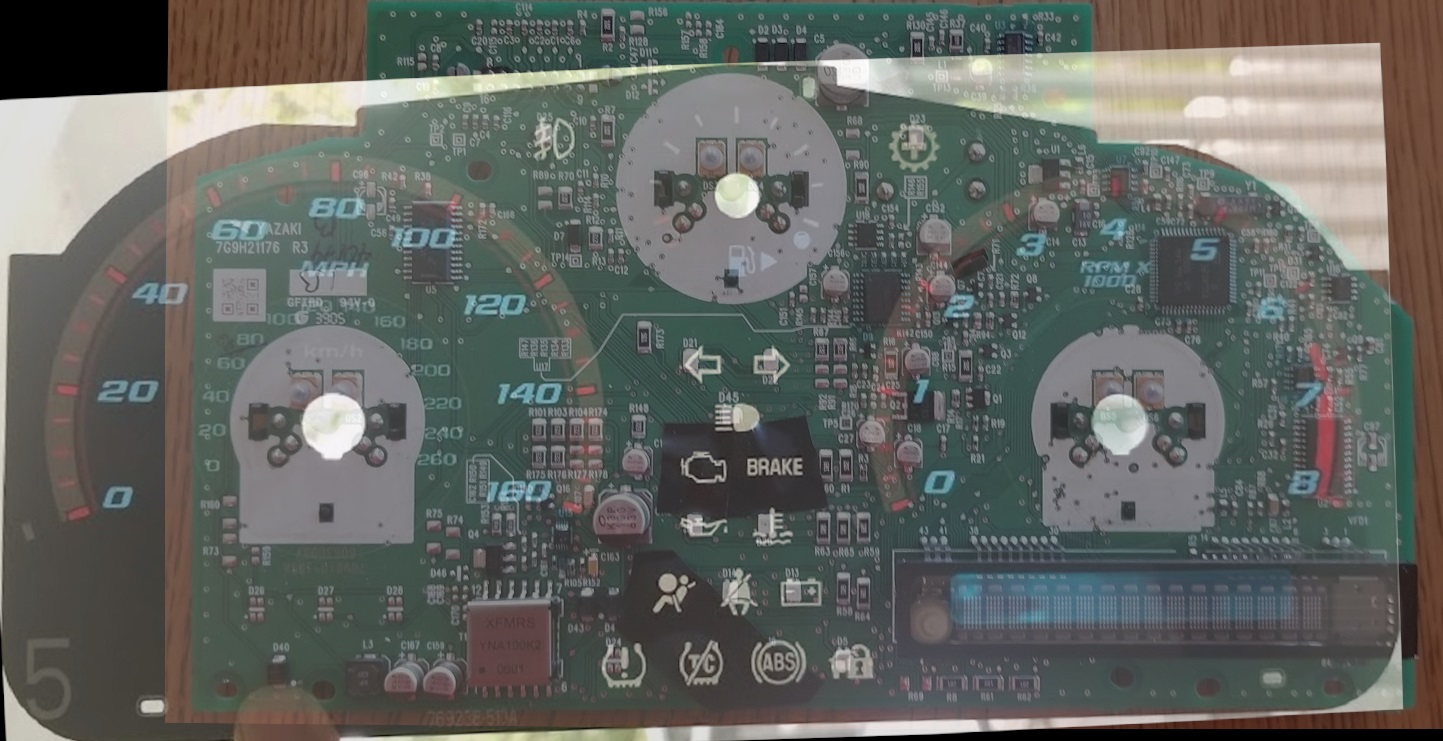
Here is an overlay of the last 2 pictures to show how the black tape aligns with the dash film.
After I took these images, I realized I shouldn't have covered the check engine light, so I went back and removed the tape off of it.
I should be able fix that in HP Tuners.
Edit: HP Tuners use to let me turn off the engine light, but the latest HP software does not have this ability. Something to do with new regulations.
The black tape covers those 5 LEDs, and the next picture is the dash film when placed on a window to show all the translucent areas.
Here is an overlay of the last 2 pictures to show how the black tape aligns with the dash film.
After I took these images, I realized I shouldn't have covered the check engine light, so I went back and removed the tape off of it.
I should be able fix that in HP Tuners.
Edit: HP Tuners use to let me turn off the engine light, but the latest HP software does not have this ability. Something to do with new regulations.
Last edited:

Desert Sasqwatch
Bigfoot Goblin

- Desert Sasqwatch Bigfoot Goblin
Or we could wait for Brad to finish his next Goblin gadget and select which light we want to disable. 

 dfkitcar.com
Goblin Warning Light Eliminator (Airbag, Seatbelt & Tire Pressure + Bonus Features)
Would be good to make this switchable if possible to accommodate both ways to build - if too difficult turning this off gets my vote. :) All of the features can be enabled or disabled from the menu. You can see it in this video from November:
- bradr Well-Known Member
After I took these images, I realized I shouldn't have covered the check engine light, so I went back and removed the tape off of it.
I should be able fix that in HP Tuners.
I was able to delete all the codes that were throwing check engine lights on my 2010 SS using HP tuners - they make it really easy.
Or we could wait for Brad to finish his next Goblin gadget and select which light we want to disable.
Goblin Warning Light Eliminator (Airbag, Seatbelt & Tire Pressure + Bonus Features)
Would be good to make this switchable if possible to accommodate both ways to build - if too difficult turning this off gets my vote. :) All of the features can be enabled or disabled from the menu. You can see it in this video from November:
I'm waiting on a bid to have the circuit boards built by a production facility. I hope to hear back soon!

Towerdog
Goblin Guru

- Towerdog Goblin Guru
As I sit here cutting these traces all I can think about is the Iphone headphone jack hack!Here is an updated version to include the trace to remove the BRAKE indicator on the dash. The BRAKE will light and stay on if your donor had ABS and now no longer has the ABS controller.
View attachment 5641
Attachments

Ross
Goblin Professor
- Ross Goblin Professor
Chad identified the instrument panel (IP) brake light on the circuit board, so he could cut the copper line on the circuit board.
Makes me wonder how easy it would be to connect the IP brake light directly to the parking brake switch.
Makes me wonder how easy it would be to connect the IP brake light directly to the parking brake switch.
Blizzard25
Well-Known Member
- Blizzard25 Well-Known Member
I'm about 9 years too late to this, but cutting traces on auto PCBs is a really, really bad idea unless you like playing the game "How long will my electronics work until they catastrophically fail".
Especially since you're cutting so near vias you altering impedance and interrupting a reference plane. For the most part initially you'll be fine, but as you start to get copper oxidation at the cut point, you get parasitic inductance and coupling to nearby traces. That scales nonlinearly with frequency. And once it fails, the only fix will be to order a new PCB unless you know how to repair traces properly.
It'll work initially. For years even. Until suddenly it just doesn't anymore.
Especially since you're cutting so near vias you altering impedance and interrupting a reference plane. For the most part initially you'll be fine, but as you start to get copper oxidation at the cut point, you get parasitic inductance and coupling to nearby traces. That scales nonlinearly with frequency. And once it fails, the only fix will be to order a new PCB unless you know how to repair traces properly.
It'll work initially. For years even. Until suddenly it just doesn't anymore.
Desert Sasqwatch
Bigfoot Goblin
- Desert Sasqwatch Bigfoot Goblin
Cut copper traces on the boards should be coated to prevent oxidation - clear nail polish works. 12 and 5 VDC signals have little tendency to create cross-trace signal paths (dendritic) with the low current signals (or ground signals) to illuminate the indicator lamps. These signals are not frequency dependent to illuminate an incandescent indicator lamp. Trace cutting, if done correctly without having copper smearing between traces, should be safe to perform.
I believe that several builders have cut board traces to eliminate these indicator lamps. Don't recall seeing any reports of issues after the fact related to trace cutting requiring the dash panel board replacement.
I believe that several builders have cut board traces to eliminate these indicator lamps. Don't recall seeing any reports of issues after the fact related to trace cutting requiring the dash panel board replacement.
Blizzard25
Well-Known Member
- Blizzard25 Well-Known Member
Cut copper traces on the boards should be coated to prevent oxidation - clear nail polish works. 12 and 5 VDC signals have little tendency to create cross-trace signal paths (dendritic) with the low current signals (or ground signals) to illuminate the indicator lamps. These signals are not frequency dependent to illuminate an incandescent indicator lamp. Trace cutting, if done correctly without having copper smearing between traces, should be safe to perform.
I believe that several builders have cut board traces to eliminate these indicator lamps. Don't recall seeing any reports of issues after the fact related to trace cutting requiring the dash panel board replacement.
Yeah i did kind of gloss over the mitigation of corrosion, so oxidation isn't the strongest argument against it. For argument's sake, let's assume you take all the precautions and use the steps you said to seal off the cut traces. And sure, let's assume no copper smearing, so I'll go ahead and give you ideal conditions.
You're still kind of missing that DC signals have nanosecond rise times and EMI is driven by change in current (and voltage) over time, not steady state voltage. And the lamp may be DC but the lamp driver isn't, and it expects a defined reference ground and return path.
No there may not be failures. Yet. But there will be a few. And when there's better ways of achieving the same goal, why?
Desert Sasqwatch
Bigfoot Goblin
- Desert Sasqwatch Bigfoot Goblin
Interested to hear what the alternative is you are expressing? BCM or ECM programming? I'm certain that many builders would be interested in an alternative to cutting traces (or putting tape on lamps).