• We've upgraded and reskinned the forum. Notice something off? Email us at [email protected] and we'll fix it.

Windshield angle

Indy Lonnie

Well-Known Member
Indy Lonnie
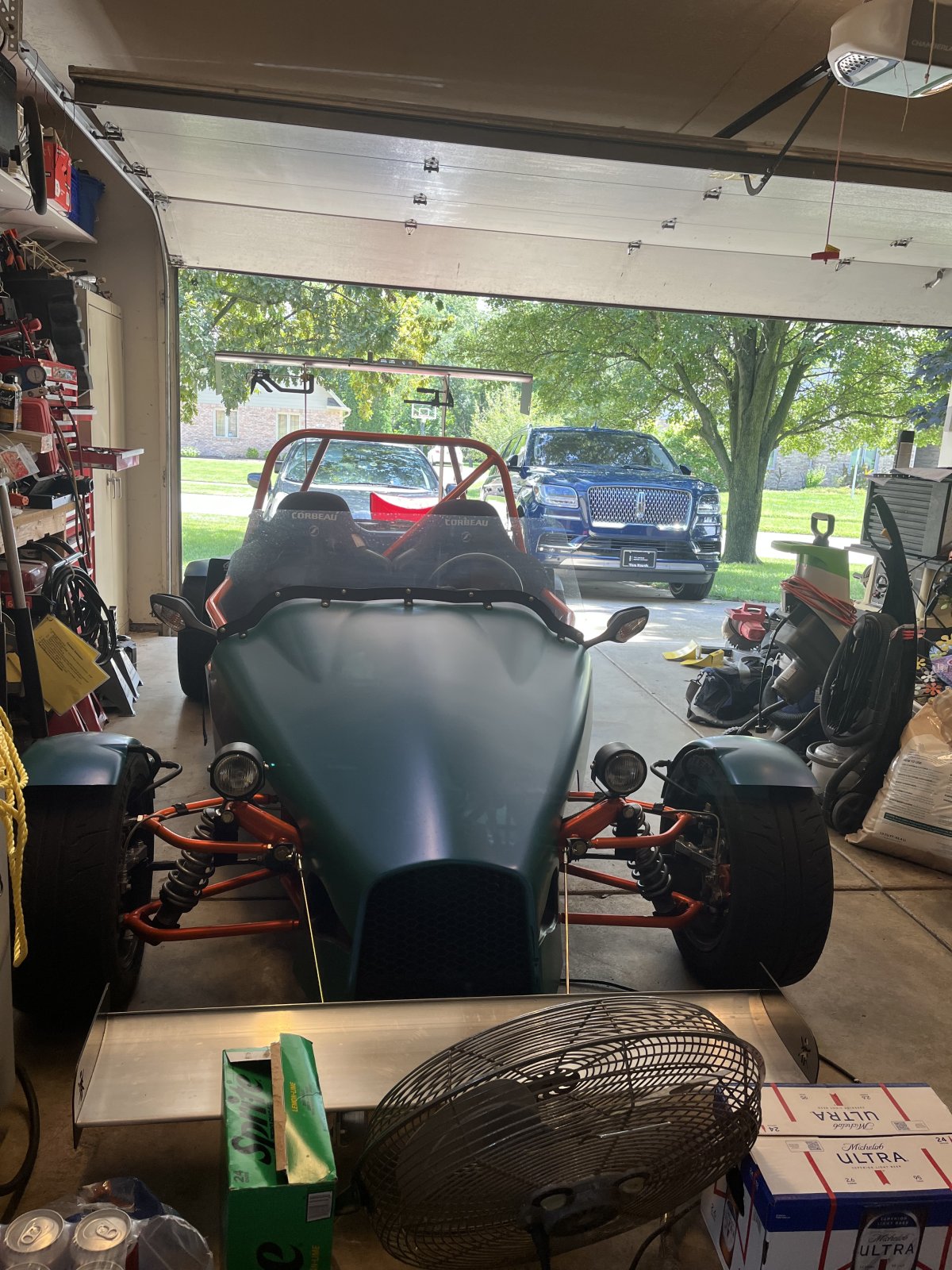
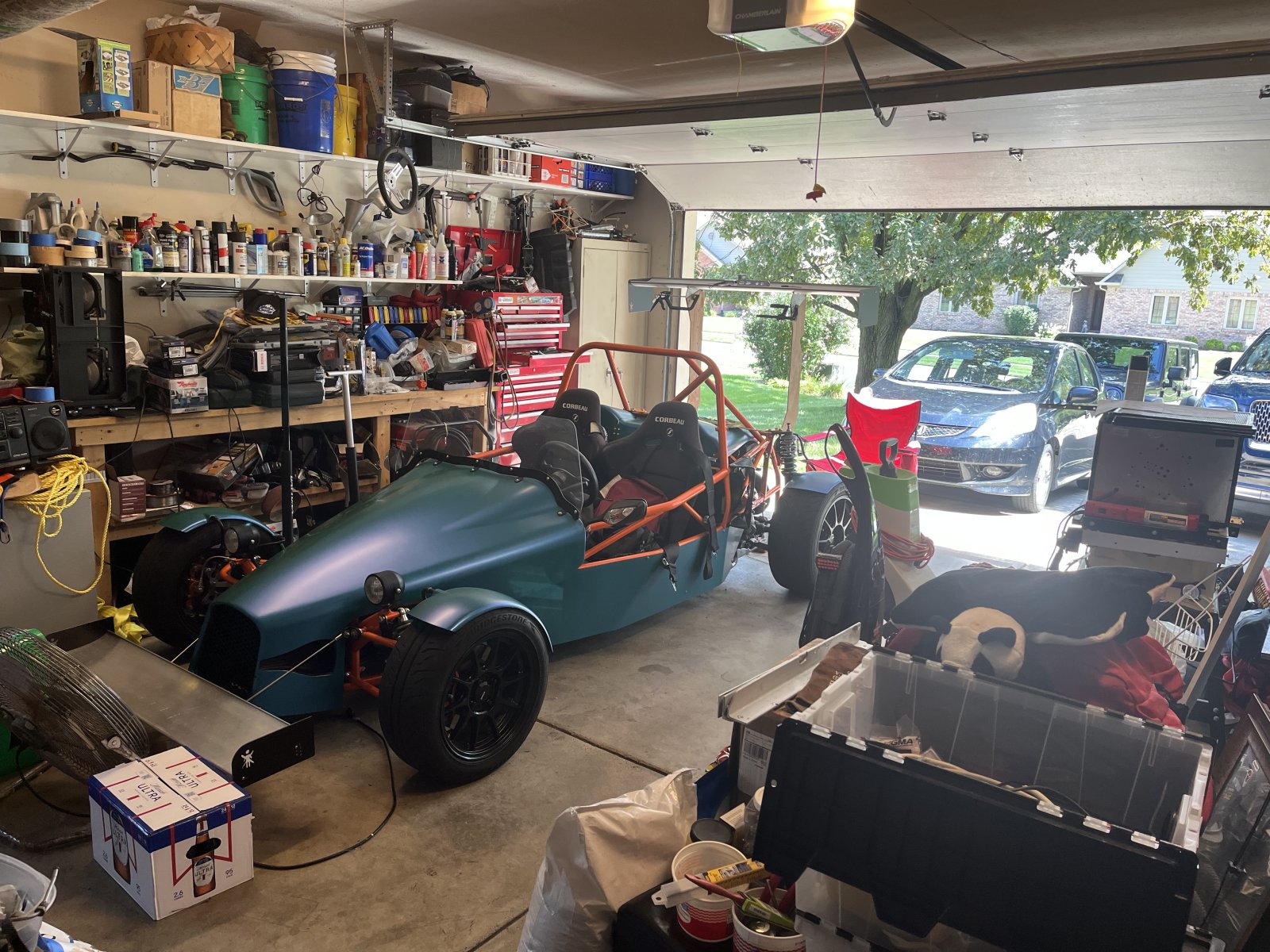
So I posted a while ago about seeing if my rear wing with the DF wing stands was doing anything. It wasn’t.

I finally made some stands out of plywood and they look ridiculous. The stands are 20” taller then the DF stands.
How far back can I lean the windshield and still have the air pass over my head while at speed? I’m 6’2”. I would like to lean back the windshield and retry my experiment.
I would like to have the rear wing working - function over form (within reason).
IMG_2072.jpeg
IMG_2071.jpeg
 
duthehustle93
I don't have direct experience on windshield angle, but once you find where you want to set that, you might start fighting the wake caused by your main roll hoop. You might also want to remove the windshield and re-test just to verify that the windshield is the cause of your turbulence. The diagram below doesn't do a justice, but a 1.5" tube being pulled through clean air will cause a large turbulent wake behind it.

If you are fighting a wake by your main roll hoop, you can 3D print a tail for your main hoop to reduce the wake. I've done it before for wing uprights, but I didn't do any comparative testing.

Also, whatever your solution ends up being, make sure that the bottom of your airfoil is what gets clean air. That's where most of your downforce is generated (not the top).

53496
 
Last edited:
Desert Sasqwatch
If you're 6'2" the standard height windshield will not keep air from hitting your forehead at almost any angle. It would need to be taller (obviously), especially if it is laid back in angle, that could be made from plexiglass just cut taller or purchase the taller windshield from DF.
The better windshield angle will help reduce turbulence over the top - but only slightly. Just need to accept the fact that a rear mounted wing, unless mounted very high (like your plywood mounts), will reside in dirty air.
One option is to mount a wing over the b-pillar, ahead of most dirty air at the back of the car and higher into cleaner air. A few builders have opted for this location and could chime in about their experiences.
 
pisco
I don't have direct experience on windshield angle, but once you find where you want to set that, you might start fighting the wake caused by your main roll hoop. You might also want to remove the windshield and re-test just to verify that the windshield is the cause of your turbulence. The diagram below doesn't do a justice, but a 1.5" tube being pulled through clean air will cause a large turbulent wake behind it.

If you are fighting a wake by your main roll hoop, you can 3D print a tail for your main hoop to reduce the wake. I've done it before for wing uprights, but I didn't do any comparative testing.

Also, whatever your solution ends up being, make sure that the bottom of your airfoil is what gets clean air. That's where most of your downforce is generated (not the top).

View attachment 53496

is it ridiculous to consider creating a wing profile around the roll hoop tube? Seems like it might solve a few problems with goblin geometry it woold put the wing forward of the rear wheel, and in clean”er” air
 
Indy Lonnie
Quick google search:
  • Aerodynamic Optimization:
    Studies show that there is an optimal windshield angle for minimum drag, often found to be less than 45 degrees. For example, one study found that a 32-degree back windscreen angle, combined with a 15-degree hood inclination, resulted in the lowest drag coefficient.
Hood Angle:
  • The angle between the windshield and the hood (often referred to as "alpha") is also important.
  • Flow separation, where the airflow detaches from the surface, can occur at the junction of the hood and windshield.
  • A more acute angle (smaller angle between the windshield and hood) tends to shift the flow separation point further back on the hood.
  • Conversely, a more obtuse angle (larger angle) tends to move the separation point further up the windshield.
In summary: Windshield angle is a critical factor in vehicle aerodynamics. A sloped windshield reduces drag, improves fuel efficiency, and can enhance stability. The optimal angle is determined through a balance of aerodynamic performance, driver visibility, and design considerations.
 
G
I would be careful on any "general" recommendations for anything related to aero. Are those based upon a fully enclosed car (probably)? How does that relate to an open wheel, open top car? Probably unknown.
 
duthehustle93
is it ridiculous to consider creating a wing profile around the roll hoop tube? Seems like it might solve a few problems with goblin geometry it woold put the wing forward of the rear wheel, and in clean”er” air
Not ridiculous at all, but it would make manufacturing and assembly a nightmare, as well as adjusting AOA.
 
pisco
Not ridiculous at all, but it would make manufacturing and assembly a nightmare, as well as adjusting AOA.

I pictured a 3d printed 2 piece profile that basically clamps to the tube and rotates to adjust aoa
or we just throw a huge wing on like a sprint car...
 
duthehustle93
Quick google search:
  • Aerodynamic Optimization:
    Studies show that there is an optimal windshield angle for minimum drag, often found to be less than 45 degrees. For example, one study found that a 32-degree back windscreen angle, combined with a 15-degree hood inclination, resulted in the lowest drag coefficient.
Hood Angle:
  • The angle between the windshield and the hood (often referred to as "alpha") is also important.
  • Flow separation, where the airflow detaches from the surface, can occur at the junction of the hood and windshield.
  • A more acute angle (smaller angle between the windshield and hood) tends to shift the flow separation point further back on the hood.
  • Conversely, a more obtuse angle (larger angle) tends to move the separation point further up the windshield.
In summary: Windshield angle is a critical factor in vehicle aerodynamics. A sloped windshield reduces drag, improves fuel efficiency, and can enhance stability. The optimal angle is determined through a balance of aerodynamic performance, driver visibility, and design considerations.

Are you trying to find an angle that will retain laminar flow/"flow attachment" above the cockpit, similar to what you would see with with a bodied car with a roof (and ideally a fastback)? Regardless of your angle, you are going to spill over and recirculate behind the windshield; you are just trying to bring that turbulent flow low enough so that it doesn't affect the wing as much.

Kyle.Engineers has a great youtube channel on aero and this video may help you understand the issue you are trying to solve. However, it doesn't address your main roll hoop.

 
Rauq
If you're 6'2" the standard height windshield will not keep air from hitting your forehead at almost any angle. It would need to be taller (obviously), especially if it is laid back in angle, that could be made from plexiglass just cut taller or purchase the taller windshield from DF.
What's this based on? I'm 6'2" and can wear a ball cap at highway speeds sitting in the DF-sourced Corbeau seats.
 
G
Did you rake the windshield back? I’m wondering how far back I can go without getting the airflow into my head.
I would think this is affected more by the absolute height of the windshield than by the angle, within the range of the angle change we can realistically achieve. I have a very short windshield that I don't remember getting hit by the wind and I think this was before I lowered the seats a little. And I have a long torso for 6ft tall.
 
SmsDetroit
I leaned my back an additional 10deg. Think if I do it again I’d go 15deg. I just put the frame in a vice and bent each of the tabs using an angle finder
 
Back
Top